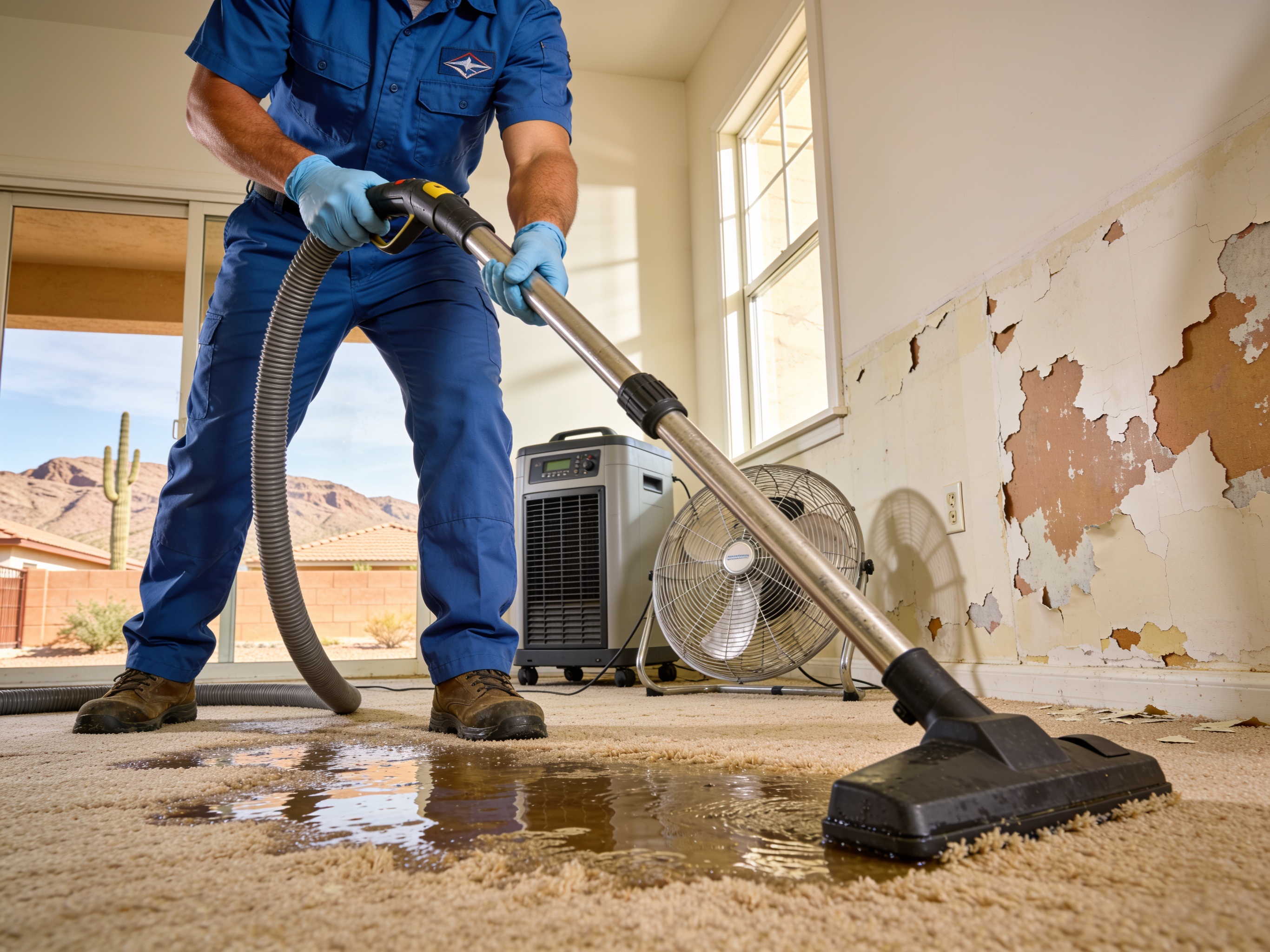
Phoenix homes built before 1990 in Maryvale and South Mountain often have slab foundations and older plumbing that crack under the extreme summer heat, sending water into walls and under flooring. Cleanup crews must pull baseboards and use moisture meters to find hidden saturation because the dry desert air outside can mask how much moisture remains inside the structure. Failing to address this leads to swelling in the stucco and drywall common throughout Maricopa County.
After monsoon storms or pipe bursts, water migrates quickly through the gravelly soil around properties near Papago Park and the Phoenix Zoo. Technicians use truck-mounted extractors first, then place air movers and dehumidifiers in a grid pattern sized to the square footage. In Ahwatukee and Arcadia homes with tile over concrete, crews often have to remove sections of flooring to prevent trapped moisture from wicking back up weeks later.
Nearby Scottsdale and Tempe properties share similar irrigation and pool equipment failures that send water under patios. Cleanup includes treating affected areas with antimicrobial solutions rated for the high temperatures that accelerate bacterial growth. Crews document every step with photos because insurance adjusters in the valley require proof that all wet materials were addressed before any rebuild begins.
Technician insight
In Phoenix the thing that catches most people out with Water Damage Cleanup is how fast the extreme summer heat drives moisture into the slab and under tile before anyone notices; older Maryvale homes with original plumbing are the worst because the soil is so porous that water travels under the foundation and reappears weeks later in a different room.
Hidden Slab Leak in Ahwatukee
A homeowner noticed buckling tile near the laundry room after a hot stretch. Meters showed saturation under the slab extending into the hallway. Crews extracted water, opened baseboards, and ran drying equipment for four days until readings normalized. The home passed final inspection without mold returning.
Water Damage Cleanup Services We Offer
✓Emergency Water Extraction
Removes standing water from floors and carpets after appliance leaks or storms using truck-mounted pumps sized for Phoenix homes.
✓Structural Drying and Dehumidification
Places industrial air movers and dehumidifiers to pull moisture from walls and subfloors in hot desert conditions before mold sets in.
✓Carpet and Pad Removal
Cuts and disposes of saturated carpet and padding in older Maryvale and Biltmore homes where water has wicked into the backing.
✓Hardwood Floor Drying
Uses specialized equipment to dry or remove swollen hardwood in Arcadia and Camelback East properties after slow leaks.
✓Drywall and Insulation Removal
Cuts out water-damaged drywall and insulation up to the moisture line to stop hidden mold growth in stucco homes.
Water Damage Cleanup Cost in Phoenix, AZ
| Service | Typical Range | What Affects It |
|---|---|---|
| Small room extraction and drying | $450–$850 | Single room under 200 sq ft with category 1 water |
| Whole-home drying setup | $1,200–$2,400 | Multiple rooms or category 2 water requiring 3–5 days of equipment |
| Carpet and pad removal | $300–$600 | Labor and disposal for average living room size |
| Daily equipment rental extension | $150–$300 | Per additional day beyond initial setup |
Ranges are typical for Phoenix, AZ and confirmed with an exact written quote before any work starts.
How it works
- 1
On-Site Assessment
Technician arrives within hours, maps water migration with meters, and notes affected materials in homes from Ahwatukee to South Mountain.
- 2
Water Extraction
Removes standing water with pumps and wands, focusing on slab edges and under cabinets common in Phoenix construction.
- 3
Drying Setup
Positions air movers and dehumidifiers in a calculated grid, adjusting for the extreme heat that speeds evaporation but risks rapid mold.
- 4
Daily Monitoring
Returns each day to check moisture levels and move equipment until readings match unaffected areas of the home.
Pricing
Pricing depends on square footage affected, water category, and how many days drying equipment must run.